
The Hidden Cost of Keeping Payroll In-House
by Jakub Jahnl on October 16, 2026
The Hidden Cost of Keeping Payroll In-House
The payroll cost calculation is often too narrow
When businesses compare in-house payroll with outsourced payroll, the calculation is often too narrow. They may look at the cost of software, the monthly fee for an outsourced provider or the salary of the person who currently runs payroll. Those numbers matter, but they do not tell the full story.
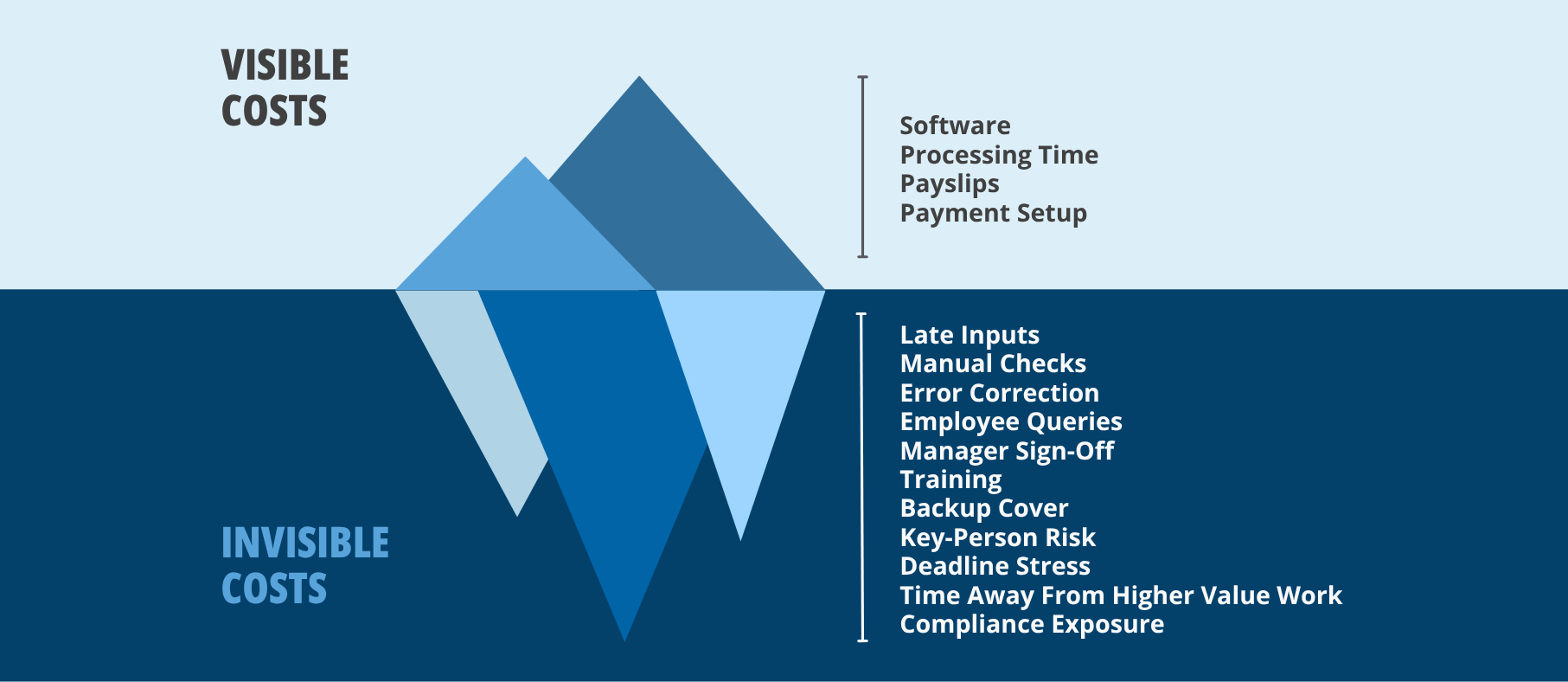
The real cost of keeping payroll in-house includes the time spent collecting information, checking changes, handling employee questions, correcting mistakes, maintaining records and staying on top of process requirements. It also includes management oversight, training, backup cover and the cost of disruption when something goes wrong.
- Time spent gathering and checking payroll information
- Management oversight and approvals
- Training and process knowledge
- Backup cover when key staff are away
- Error correction and employee communication
- Compliance and recordkeeping risks
When payroll becomes one more task competing for attention
For many small and medium-sized businesses, payroll is handled by someone who also has other responsibilities. That may be a finance administrator, HR generalist, office manager or senior team member. Payroll becomes one more task competing for attention. When the business is busy, it can be difficult to give payroll the structure and review it deserves.
The dependency risk
There is also the risk of dependency. If one person understands the payroll process and no one else does, the business is carrying a hidden operational risk. If that person leaves, takes extended leave or becomes unavailable, the cost of rebuilding that knowledge can be far greater than expected.
Outsourcing payroll does not automatically suit every business. Some organisations may prefer to keep certain elements in-house, particularly where they have established systems and experienced internal staff. But even then, a review can be useful. The right answer may be full outsourcing, partial support, process documentation or periodic oversight.
Questions to ask before deciding
The key is to compare options honestly. How much time does payroll take each month? How often are corrections needed? How much knowledge sits with one person? How confident are you that payroll could continue without disruption if circumstances changed?
The hidden cost of payroll often shows up in time, stress, errors, duplication and risk.
The hidden cost of in-house payroll is not always visible on a budget line. It shows up in time, stress, errors, duplication and risk. Once those costs are understood, business owners can make a clearer decision about what level of support is right for them.
SHARE THIS ARTICLE
Recent Articles

Human Resources Webinar - Targeted Recruitment Support Why we Hosted This AMA?

Still using spreadsheets to manage HR? Learn when Excel stops working for employee records, leave tracking, payroll inputs and reporting, and how an HRIS can help.

Payroll mistakes cost more than money. Learn how payroll errors affect employee trust, management time and business reputation.