
Who's Running Payroll When Your Payroll Person Is on Leave?
by Jakub Jahnl on November 10, 2026
Who's Running Payroll When Your Payroll Person Is on Leave?
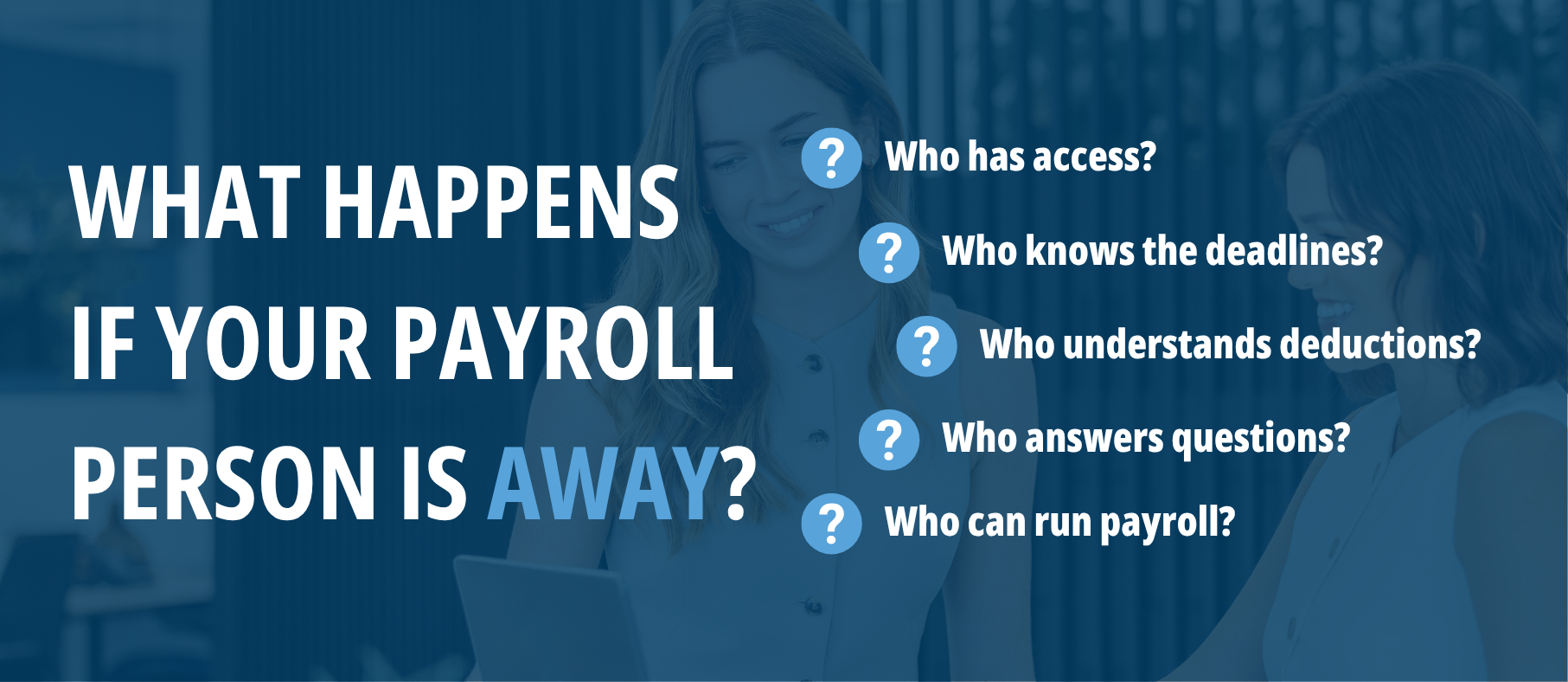
When payroll knowledge sits with one person
In many businesses, payroll works because one person knows how it works. They know which spreadsheet matters, when timesheets need to be chased, which managers approve overtime, how benefit deductions are handled and which employee changes need extra attention. That knowledge is valuable, but it can also become a single point of failure.
If your payroll person is on leave, unwell or unexpectedly unavailable, who steps in? More importantly, could that person run payroll accurately without calling the usual person, searching through old emails or guessing how exceptions were handled last month?
- Who has access to the payroll files and records?
- Who knows the monthly deadlines and approval points?
- Who understands exceptions, deductions and benefits changes?
- Who can answer employee payroll questions confidently?
- Who can run the process if the usual person is unavailable?
The risk of undocumented payroll processes
This is one of the most common weaknesses in payroll administration. The process may be familiar to the person who manages it, but not properly documented for anyone else. Important steps may live in emails, saved files, calendar reminders or simply in someone’s head. That creates risk during planned leave, but it becomes even more serious when absence is unexpected and payroll deadlines are already close.
Payroll continuity cannot usually wait
Payroll continuity matters because payroll cannot usually wait. Employees still need to be paid accurately and on time. Deductions still need to be processed. Changes still need to be captured. Deadlines still need to be met. A business can delay many administrative tasks, but payroll is rarely one of them.
How external payroll support helps
This is where external payroll support can be valuable, even for companies that are not ready to fully outsource. A payroll partner can help review the existing process, document key steps, confirm access and approval requirements, identify gaps and provide cover or ongoing support where needed. The goal is to make payroll less fragile, not to remove all internal involvement.
A strong payroll process should not depend on one person being available every month. It should be clear enough that responsibilities can be covered, records can be found and approvals can continue. That does not remove the need for internal ownership, but it does reduce operational vulnerability.
A strong payroll process should not depend on one person being available every month.
Business continuity is often discussed in the context of technology, disaster recovery or senior leadership succession. Payroll deserves a place in that conversation too. If one absence could put payroll under pressure, the business does not just have a staffing issue. It has a process risk that should be addressed before employees, managers or clients feel the impact.
Need more resilience in your payroll process?
CML can help businesses document, review and support payroll administration so the process is not dependent on one individual. Whether you need backup support, process documentation or managed payroll assistance, our payroll team can help make payroll more reliable and easier to cover.
SHARE THIS ARTICLE
Recent Articles

Payroll takes more time than most businesses realise. Learn where payroll workload builds up across the month and how to identify process pressure points.

Growing businesses need stronger HR foundations. Learn what usually breaks first when a company scales and how HR consulting can help.

Keeping payroll in-house may cost more than you think. Understand the hidden time, risk and dependency costs behind internal payroll management.